

June 2026
Table of Contents
-
President's Blog
-
Biomechanics Through Time
-
Congress News
-
Student's Corner
-
Around The World
-
In Memoriam
-
Journal News
President's Blog
Dear ISB community,
Welcome to the June edition of ISB Now.
As many of you know, the FIFA World Cup is taking place these days. Millions of people are watching the matches, celebrating victories, and discussing performances. What we rarely see, however, are the years of preparation behind each of those moments. Four years of work may ultimately be judged by seven or eight matches.
In many ways, biomechanics is no different. Our major congresses are the visible moments that bring our community together, but they are only the final stage of years of preparation, collaboration, and dedication. Behind every presentation, keynote lecture, student award, and scientific discussion, there are people investing time and energy to advance our field.
Next month, many of us will gather in Vancouver for the 10th World Congress of Biomechanics. One year later, we will meet again at the ISB 2027 in Sydney. These events are milestones, but not isolated ones. They are the result of continuous work happening every day in laboratories, clinics, classrooms, research groups, affiliated societies, technical groups, and local communities around the world. Just as a national team and its athletes prepare for years before competing on the world's biggest stage, our community continuously prepares for these moments of scientific exchange and collaboration. National congresses are happening in different countries. Technical groups are meeting in specialized symposia. National Biomechanics Day events once again showcased biomechanics to students worldwide in 2026. Research groups organize weekly seminars and journal clubs. Interest groups like BBA, IWB, and Latinx in Biomechanics continuously work to bring people together to support each other in mentoring sessions. This is the continuous work happening every day that we need to participate in, support, and value on the road to our milestones, the big global events.
No initiative is too small to promote change. When student turnout at lectures or workshops is low, I often remind my students that if our event inspires even one person, it was worthwhile. As an African proverb says, “If you think you are too small to make a difference, try sleeping with a mosquito.”
Looking back, I often think about my own first experiences with ISB. Receiving a student travel grant almost twenty years ago seemed like a small event at the time. Today, I realize how much that opportunity influenced my professional journey and ultimately led me to the position from which I am writing this blog. Small initiatives can have consequences that we only understand years later. I know I have mentioned this many times, and be prepared to hear it again in the future, because it is true!
Sometimes, at bedtime (I know, bedtime is probably not the best time to start thinking), I find myself asking: Are we moving in the right direction? Are we creating value for our members? Are we helping biomechanics move forward by being more inclusive?
I am confident that we are. Over the past year, we have focused on three priorities: creating opportunities, strengthening our infrastructure, and expanding our global reach.
Over the past year, ISB has expanded its presence within the biomechanics community by participating in scientific events worldwide. We launched a mentoring initiative involving our ISB Fellows, established contact with interest groups willing to strengthen national societies and create new ones, and secured funding to support national and regional events in different parts of the world, including Central America (for the first time hosting a biomechanics congress) and Africa. Not to mention that we are well advanced in the implementation of a completely renewed, modern website (coming soon!) and have reached an advanced stage in registering ISB as a non-profit organization. We also completed the selection process for a Professional Conference Organizer, a strategic step approved by our General Assembly in Stockholm, to support future Congresses. At the same time, we have advanced discussions on sponsorship renewal, established the ISB-Lululemon Female Research Award, supported students through travel grants and international exchange opportunities, and received five expressions of interest from groups interested in hosting the 2029 ISB Congress. As you read in this edition of ISB Now, we have also agreed with one major journal in our field to expand member access, increase promotion of author contributions, and improve accessibility for researchers in lower- and middle-income countries. These achievements are the result of teamwork. Just as no team wins a championship because of a single player, no scientific society advances because of a single person. The progress of ISB depends on the contributions of volunteers, students, researchers, educators, affiliated societies, technical groups, and members who choose to invest their time and energy in our community.
To all of them, I would like to express my sincere gratitude. As we approach Vancouver and continue our journey toward Sydney 2027, I hope many of you will take advantage of the opportunities available through ISB, whether by attending events, applying for grants, participating in mentoring activities, engaging with our new online platforms, or simply connecting with fellow biomechanists.
And speaking of opportunities, I hope to meet many of you in person during the coming months. One of the greatest privileges of serving ISB is the chance to connect with colleagues from around the world, and I look forward to continuing these conversations in Vancouver, Sydney, and many other places where biomechanics brings us together.
When the next great milestone arrives, whether it is WCB in Vancouver, ISB 2027 in Sydney, or a local biomechanics event in your city, it will not be the result of two or three days of activity. It will be the result of thousands of small actions taken by people who chose to participate rather than remain spectators.
Everyone in our community has the potential to be a protagonist. However, we still have a long road ahead before this becomes a reality. We know.
Time never stops. Neither does biomechanics. Neither does ISB.
Never forget: when you become a member of ISB, you are not only adding your name to a list. You are strengthening a global network that supports students, empowers researchers, and advances biomechanics worldwide.
Felipe Carpes
ISB President
Federal University of Pampa, Brazil
Back to Table of Contents
Marian Weiss, 2nd Wartenweiler Memorial Lecture, 1979
Here, you will uncover historical information about the society. Enjoy these nuggets curated by John Challis, our Archives Officer.
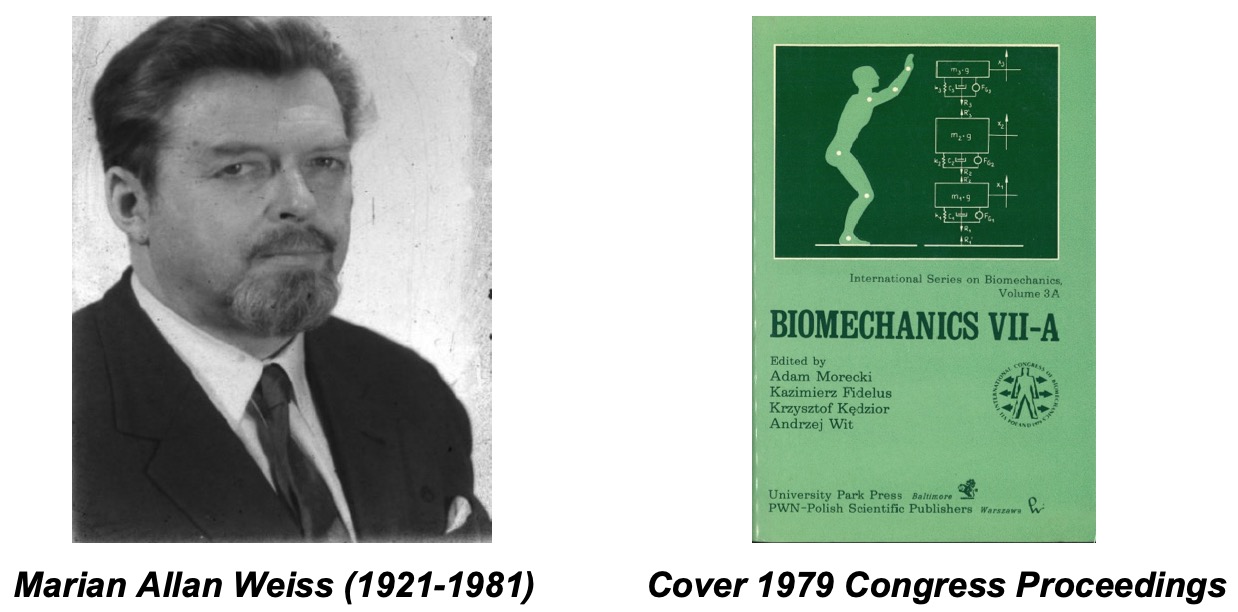
The Wartenweiler Memorial Lecture is traditionally the first presentation at each ISB Congress, it honors Jurg Wartenweiler (1915-1976) the first president of the ISB. In 1979, ISB Congress VII was held in Warsaw, Poland. At that congress the second Wartenweiler Memorial Lecture was delivered by Marian Weiss, its title was "Tasks and needs of rehabilitation bioengineering".
Dr. Weiss started his medical studies at the Jan Kazimierz University in 1938, and was awarded his medical diploma by the Jagiellonian University in 1946. During the second World War he was active in the Home Army, which was the dominant resistance movement in German-occupied Poland. As a consequence, he was awarded the Cross of Valour which is only awarded to an individual who "has demonstrated deeds of valour and courage on the field of battle." After a period serving as a doctor in the Polish Army, in 1947 he worked at the Institute of Trauma Surgery in Warsaw, and in 1949 moved to the Bone and Surgery Hospital in Konstancin which was renamed the Capital Rehabilitation Centre in 1964. It remained his primary affiliation for the remainder of his career. At the centre as its director, as well as typical hospital facilities, he developed a facility for gait analysis – a rare resource in a hospital at that time.
His research had two main foci, spinal injuries and prostheses. For the spine he developed the "Weiss' Spring Arthroplasty", it exploited a spring-loading device to stabilize the spine. He was also active in efforts to improve functional outcomes from prostheses fitting. His many papers were predominantly in Polish journals.
In addition to the honor of delivering the Wartenweiler Memorial Lecture, he was also an honorary member of the New York Physical Medicine Society, and the Swedish Orthopaedic Society. He also received an honorary doctorate from Rennes University.
Back to Table of Contents
WCB 2026: Inclusion, Diversity, Equity and Accessibility events
Greetings everyone,
The World Congress of Biomechanics is only a month away and promises to be a great conference.
I would like to point out at least two events happening at WCB in the Inclusion, Diversity, Equity and Accessibility space.
Number 1:
- Title: (SS3) Celebrating Diversity and Inclusion in Biomechanics: Global Perspectives from Student Members
- Date: 2026-07-14
- Time: 3 to 4 pm
- Place: West 208-209
This session will highlight global efforts to create diverse, equitable, inclusive, and accessible environments for students and researchers in biomechanics. Diversity Committee representatives from ESB, ASB, CSB, and ISB. We will share initiatives, best practices, and future visions for IDEA in biomechanics. This session will support learning, reflection, and community-building among early-career researchers.
Please join us for this (what will look like) an amazing session!
Number 2:
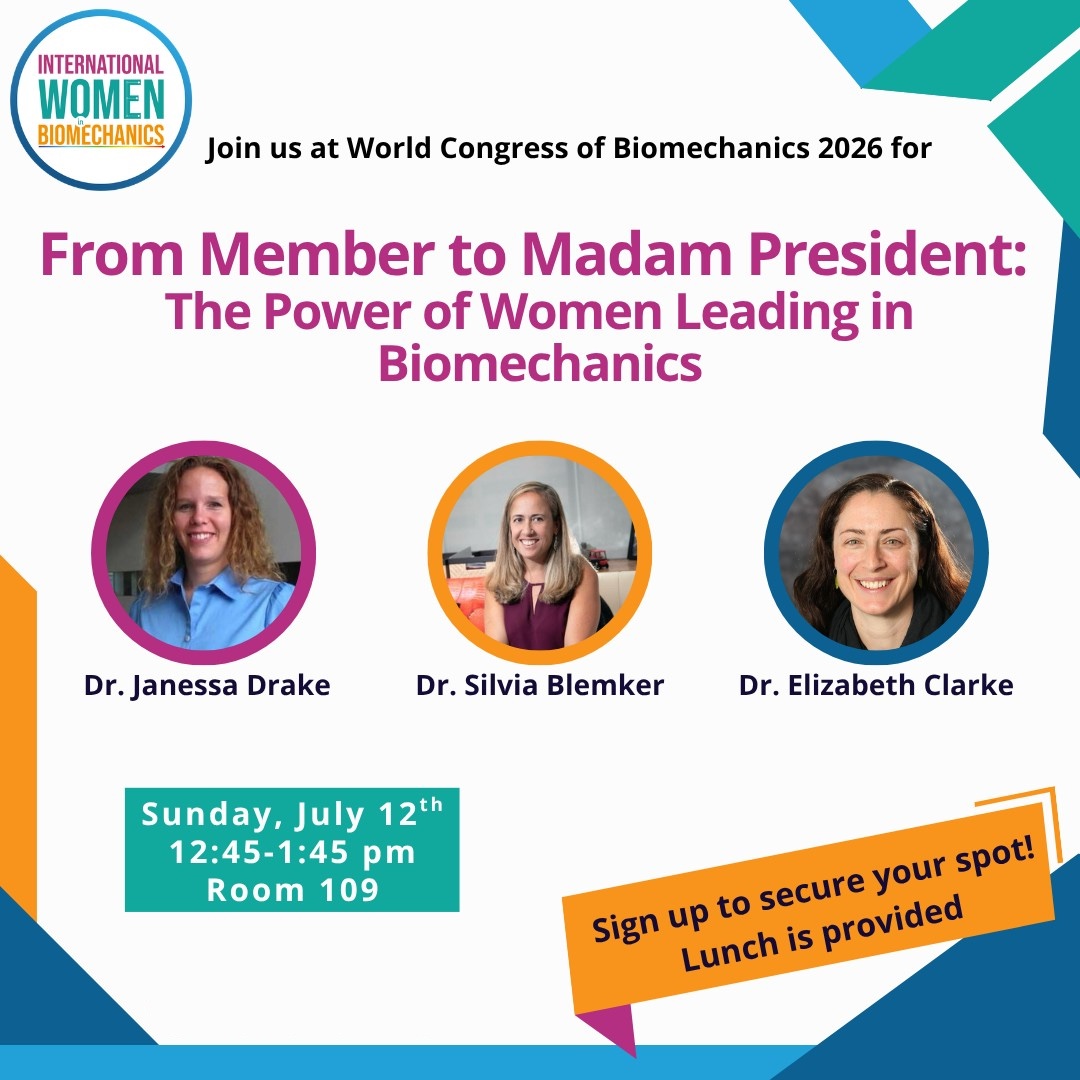
- Title: From Member to Madam President:The Power of Women Leading in Biomechanics
- Date: 2026-07-12
- Time: 12:45 to 1:45 pm
- Place: Room 109
Our affiliate society, International Women in Biomechanics, is hosting a lunch panel!
This panel discussion will bring together past and current female presidents of the American, Canadian, and International Societies of Biomechanics to share their unique leadership journeys, highlighting the importance of equity and diversity in shaping and advancing the field. This discussion will highlight key strategies for effective leadership, mentorship, and fostering inclusive environments within these scientific organizations. This session aims to inspire the next generation of biomechanists to pursue leadership opportunities with confidence, demonstrating that leadership is not limited to linear trajectories but is built through resilience, adaptability, and a commitment to advancing both science and community.
Please register using this link
I look forward to seeing you at one of these events!
Julie Choisne
IDEA Officer
Back to Table of Contents
ISB 2027: Call for Special Session Proposals
ISB Congress 2027 – Sydney, Australia
Planning is underway for the ISB Congress 2027, taking place in Sydney, Australia, and we invite the global biomechanics community to get involved early.
Expressions of Interest (EOIs) for Special Sessions are now open. This is your opportunity to help shape the scientific program by proposing innovative, interdisciplinary, and emerging-topic sessions for Sydney 2027. Find more information below and at the ISB 2027 Special Session EOI submission site.
We’ll also be attending the World Congress of Biomechanics 2026 in Vancouver this July --- be sure to stop by our booth to meet the team, learn more about the Congress, and collect your exclusive ISB Sydney 2027 merchandise.
ISB 2027 abstract submissions will open in August 2026, so now is the perfect time to start planning your contribution. To stay up to date on key dates, program announcements, and submission opportunities, we encourage you to join our mailing list via the website: https://isb2027.com/
We look forward to welcoming you to Sydney in 2027!
Call for Special Session Proposals
The ISB 2027 Scientific Committee invites the biomechanics community to help shape the scientific program of the upcoming ISB Congress in Sydney by submitting Expressions of Interest (EOIs) for Special Sessions.
Special Sessions provide an opportunity to explore topics that extend beyond traditional abstract presentations. They are designed to stimulate discussion, foster new collaborations, and address emerging challenges and opportunities facing our field. Sessions may take different formats, including invited presentations, panel discussions, debates, roundtables, interactive workshops, or other innovative approaches that promote engagement and exchange of ideas.
We particularly encourage proposals that address:
- Emerging and interdisciplinary areas of biomechanics
- Clinical translation and implementation
- Education, policy, ethics, equity, and career development
- Strategic and future-focused topics relevant to biomechanics
- Global community-building initiatives and cross-society collaborations
- The future directions of biomechanics research and practice
Special Sessions are intended to complement the core scientific program and provide space for conversations that may not naturally emerge through traditional abstract submissions alone.
One of the strengths of ISB is the diversity of expertise, perspectives, and experiences within our global community. We encourage members from all career stages, regions, and areas of specialization to consider proposing a session. Whether you wish to bring together researchers from different disciplines, discuss challenges facing our profession, showcase innovative applications, or stimulate debate about the future of biomechanics, we would love to hear your ideas.
We particularly welcome proposals that bring together diverse perspectives, include early-career researchers, and strengthen connections across regions, disciplines, and sectors.
Submission deadline: 30 October 2026
Submit your proposal at the ISB 2027 Special Session EOI submission site.
Back to Table of Contents
ISB 2029: Site Selection
Site-Selection Process for the XXXII ISB Congress in 2029
The site-selection process for the ISB Congress in 2029 is currently underway. ISB Congress locations rotate globally to promote worldwide engagement in the field. The official bidding process for local hosts of the 2029 Congress was different from previous years, as the Society has hired a professional conference organizer (PCO) to manage full-service logistical support to the planning function. The local host will serve as Conference Chair and primarily be responsible for the development and planning of the Scientific Program, including:
- Appointing a local organizing committee to collaborate with the PCO on scientific program planning, including:
- Determining the meeting theme and sessions
- Securing keynote speakers
- Reviewing submissions for workshops, oral, and poster presentations
- Developing the overall scientific program
- Securing financial and in-kind support from local/regional partners in government, academia, and industry.
- Providing suggestions and support for local social events, such as lab tours, evening socials, banquets, excursions, and student-led activities.
- Participating in regular conference planning meetings with ISB representatives and the PCO.
- Identifying and confirming session moderators.
The calls for applications to host the ISB Congress in 2029 were published in the September 2025, December 2025, and March 2026 issues of the ISB Now newsletter. In total, we received 5 bids representing distinct geographic regions across three different continents. The PCO will be analyzing each site for feasibility, delegate potential, costs, and sponsorship opportunities, to aid in the decision. The ISB executive council will then evaluate and vote on the Congress location at our next council meeting, scheduled during the World Congress of Biomechanics (July 11-15, Vancouver, Canada). ISB members can expect an announcement of the selected location and local host shortly thereafter.
Thank you,
Brent Edwards
ISB President-Elect
Back to Table of Contents
Updates from the Student Representative
Site-Selection Process for the XXXII ISB Congress in 2029
Dear students,
I hope you are all doing well and enjoying the start of the summer season. With conference season now underway, the biomechanics community is especially active, with exciting events, networking opportunities, and student-focused initiatives across our networks.
We are also very excited to share that we are in the process of creating a Student Committee. Stay tuned for more information on the new team members and upcoming opportunities to get involved.
In this update, you will find upcoming events, job opportunities for students, and information about the Mid-Career Mentorship Initiative, which is now underway.
Upcoming events
| Event | Date(s) | Location |
|---|---|---|
| ISB - Biomechanics in Practice Lecture Series | 2026-06-16 and 30 | Online |
| 10th World Congress of Biomechanics | 2026-07-11 to 15 | Vancouver, Canada |
| International Society of Biomechanics in Sports | 2026-07-27 to 31 | Loughborough, UK |
| ESMAC | 2026-09-14 to 19 | Netherlands/Belgium |
Student opportunities at WCB and ISBS
Both WCB and ISBS are offering a wide range of activities for students, so be sure to check their websites for full details and registration information. WCB activities include a student welcome lunch, mentoring with biomechanics experts, a student social mixer, professional roundtables, and morning social fun runs. ISBS activities include reduced student registration, low-cost accommodation, a student mentor programme, travel grants, and a student night.
Jobs and Positions
The Biomch-L community continues to share opportunities for students and early career researchers. Current openings include:
- MASc in Biomedical Engineering, Cardiac Medical Devices & Tissue Mechanics - Waterloo, Canada
- Funded PhD Assistantship in Biomechanics - MT, USA
- School of Applied Health Lab Coordinator - CA, USA
- Research Scientist - VA, USA
- Master's Thesis in Computational Neuroscience and Neuromechanical Modeling - Ottignies-Louvain-la-Neuve, Belgium
New Initiative: Mid-Career Mentorship Pilot
Our Mid-Career Mentorship Initiative is now underway and off to a strong start. This pilot program connects ISB Fellows with mid-career members and other strategic groups who are navigating important academic or professional transitions and seeking guidance on their next steps. Through this initiative, participants receive support on topics such as:
- Faculty positions
- Promotions and career progression
- Grant applications
- Building high-profile collaborations
We are pleased with the engagement so far and grateful to everyone involved in helping shape this initiative. There is still one spot available for anyone interested in participating. Please reach out if you would like to be considered.
If you come across opportunities, resources, or ideas that could benefit other students, please feel free to share them through the ISB Student Channel. Additionally, you can contact me at: This email address is being protected from spambots. You need JavaScript enabled to view it..
Wishing you a productive and inspiring summer and a successful conference season. I’ll be attending WCB 2026 and am really looking forward to meeting many of you there.
See you in the next update!
All the best,
Elisa Romero Avila
ISB Student Representative
Back to Table of Contents
Biomechanics in Practice Lecture Series
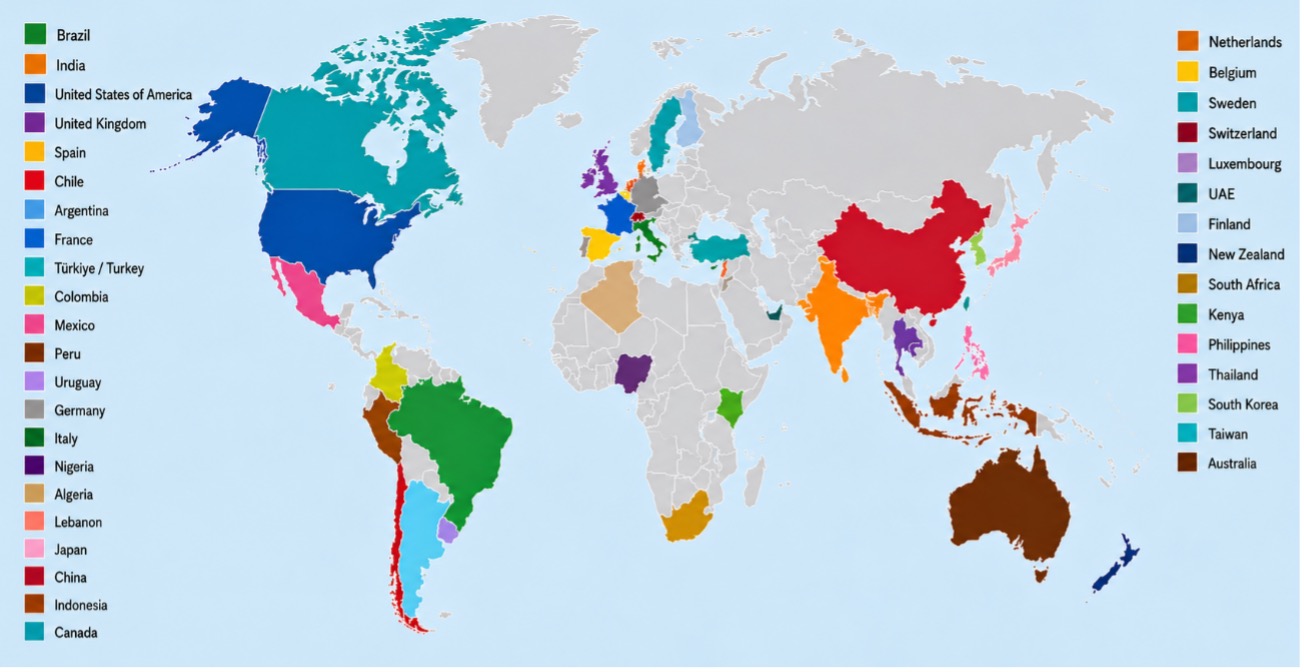
Biomechanics in Practice Lecture Series: A Successful Initiative to Engage the ISB Students' Community
Following the publication of the March issue of ISB Now and our call for action from the community, we were delighted to receive a message from Oren Tirosh (RMIT University, Australia) expressing interest in contributing to student-focused initiatives. We are grateful to Dr. Oren Tirosh for generously volunteering his time and expertise to deliver this series. This quickly evolved into a pilot project: a four-lecture series developed as part of an international collaboration between the Federal University of Pampa (Brazil) and RMIT University (Australia), with support from the ISB Education and Student portfolios, as well as two ISB-affiliated societies: the Brazilian Society of Biomechanics and the Chilean Society of Movement Sciences. The initiative was heavily advertised on ISB social media channels.
The initiative was expanded to reach a broader international audience, particularly students and early-career researchers, from 36 countries, as illustrated in the map below. The goal is to share foundational concepts in biomechanics while highlighting practical applications of research findings in clinical and performance settings. At the time of writing, two of the four lectures have been delivered. More than 150 participants registered for the series, and attendance has been strong. Selected lectures were recorded and will be made available to ISB members in the near future.
We are confident that this pilot project will inspire similar initiatives in the years ahead, creating new opportunities to connect students with experts and increasing access to high-quality educational content across the global biomechanics community. Sponsors willing to support initiatives like this are invited to reach out to learn more about the current sponsorship opportunities at ISB. Keep an eye on the ISB website and our Instagram and LinkedIn pages for updates on this and other upcoming initiatives.
Felipe Carpes
Elisa Romero
Jos Vanrenterghem
Back to Table of Contents
ACCM Congress 2026: Ten Years Of Movement Sciences In Chile
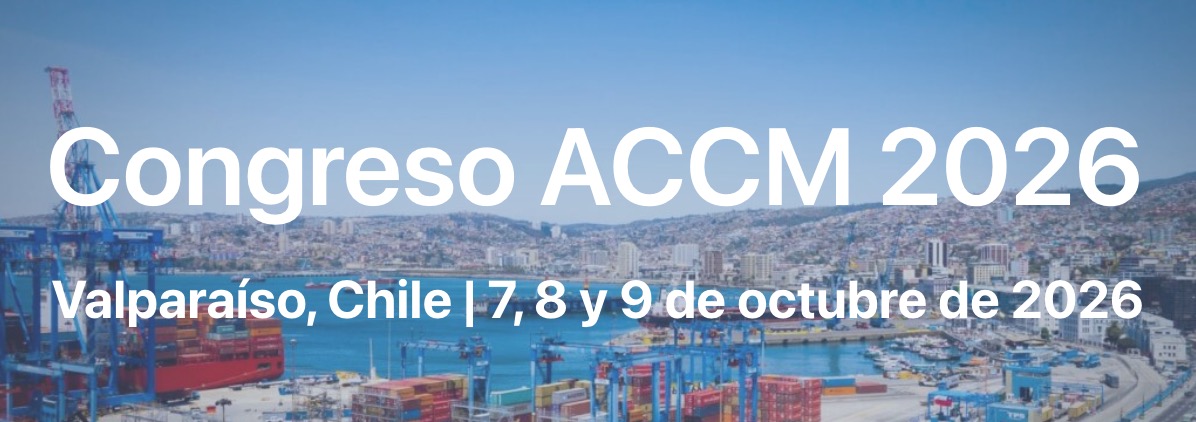
Ten Years of Movement Sciences in Chile: ACCM Looks Toward 2026
A decade after the first congress of the Asociación Chilena de Ciencias del Movimiento (ACCM) , the Chilean movement sciences community is preparing for a milestone edition: the V ACCM Congress 2026. To mark this occasion, we spoke with Juan José Marimán, PhD, current President of ACCM, and Oscar Achiardi, MSc, President of the 2026 Congress.
For Dr. Marimán, the evolution of movement sciences in Chile reflects the consolidation of a genuinely multidisciplinary field. Although its roots are strongly connected to Physical Education and Kinesiology, the field has progressively incorporated engineering, psychology, statistics, health sciences, and other areas. This convergence, he notes, has strengthened the study of human movement as a scientific space located at the intersection of biological, technological, and applied disciplines.
The ACCM has played a central role in this process. Created as a non-profit, transversal, and scientific association, it has become an important meeting point for laboratories, universities, scientific initiatives, professionals, and companies related to movement sciences. Its biennial congress is now regarded as one of the main scientific events in Chile devoted to discussing the multiple expressions of human movement. Beyond academic exchange, the congress has also become a space for collaboration, friendship, and community building.
Biomechanics remains a key pillar in this development. Dr. Marimán emphasizes that the study of movement in Chile emerged strongly from biomechanical approaches, which continue to shape undergraduate and graduate education, theoretical frameworks, and procedural assessment. At the same time, biomechanics now interacts productively with neuroscience, motor control, physical activity, psychology, and engineering.
For Oscar Achiardi, hosting the V ACCM Congress ten years after the first edition is both an institutional and personal milestone. Having participated in the organizing committee of the first congress, he now sees the 2026 edition as an opportunity to reflect on ACCM’s growth, while also recognizing the challenges that remain in terms of visibility, representation, and broader participation.
The 2026 congress will emphasize national and international collaboration among researchers from diverse disciplines. Its program will include thematic areas across movement sciences, with particular attention to gender equity in science, exercise and metabolic conditions, and the use of emerging technologies. A major priority will also be the participation of undergraduate and graduate students, early-career researchers, and professionals in training, supported through reduced registration fees, presentation incentives, and practical workshops.
Looking ahead, both interviewees envision ACCM as a reference scientific association for Chile and Latin America: a platform for consultation, dissemination, innovation, and knowledge transfer. In connection with regional actors, individual researchers, and international societies such as the ISB, ACCM aims to contribute to a stronger South American ecosystem for biomechanics, motor control, and movement sciences.
Joel Alvarez-Ruf
ISB South American Representative
Back to Table of Contents
Asia Region News: Spring 2026 Society Meetings
Asia Region News - Spring 2026 Society Meetings
Between March and June 2026, several Asia-Pacific biomechanics societies held their meetings—including both those affiliated with the ISB and those affiliated with the Asian-Pacific Association for Biomechanics (APAB).
- The Korean Society of Sport Biomechanics (KSSB) held its 2026 Spring Academic Seminar on May 1 at the Korea Institute of Sport Science in Seoul. The event featured lectures on inverse dynamics, AI-based sports motion analysis for coaching, and research ethics/IRB, alongside a poster session.
- The Japanese Society of Biomechanics (JSB) held its 8th Sui-Hiroba online seminar on June 13, which was free and open to non-members. Its symposium, "Considering internationally valued biomechanics research," gathered researchers with strong Journal of Biomechanics records to help early-career members align their work with international standards.
- The Biomedical Engineering Society (Singapore) held its 19th BES Scientific Meeting on May 16 at Ngee Ann Polytechnic. Organized by the BES Student Chapter, the meeting allowed students to present biomedical engineering and life sciences research to a judging panel, and included awards as well as a video competition.
- The Chinese Society of Biomedical Engineering held BME2026 from May 29 to 31 in Suzhou, featuring a dedicated biomechanics track and paper competitions. China's biomechanics community actively participates in APAB through its biomechanics committee.
- The JSME Bioengineering Division (Japan) held its 38th Bioengineering Conference on June 13–14 at the Tokyo University of Science, spanning biomechanics and mechanobiology across hybrid sessions and poster presentations.
Together, these meetings reflect the impressive breadth of biomechanics across the region this spring—ranging from sports and clinical work to mechanobiology and biomedical engineering.
Seungbum Koo
ISB Asia Representative
Back to Table of Contents
National Biomechanics Day 2026: A Growing Global Movement

National Biomechanics Day 2026: A Growing Global Movement
The 2026 edition of National Biomechanics Day (NBD) confirms what many in our community already recognize: biomechanics is expanding through outreach, diversifying, and gaining global momentum. NBD is a global event promoted by The Biomechanics Initiative (TBI). As the home of National Biomechanics Day, TBI’s mission is to advance the understanding and celebration of biomechanics around the world. Becoming a member of the TBI community is free and open to anyone with an interest in biomechanics, from students and educators to researchers and professionals.
In 2026, TBI received 37 grant applications from laboratories worldwide. From these, 13 grants were awarded, supporting outreach initiatives across seven countries. Applications were submitted from 12 countries – Austria, Brazil, Canada, Chile, Greece, India, Mexico, Nigeria, Peru, South Africa, Spain, and the USA - demonstrating the increasingly international scope of NBD. This geographic diversity reflects a shared commitment within our field to connect biomechanics with younger generations across cultural and socioeconomic contexts.
In 2026, NBD happened simultaneously around the world, reaching thousands of students. This level of engagement illustrates the strength of our distributed model: many independent laboratories, working locally, contributing to a coordinated global initiative.
Although final participation numbers will be confirmed after event reporting, a conservative estimate suggests that if each registered host engages an average of 10 students, the 2026 edition is expected to reach between 3,000 and 5,000 high school students worldwide.
A Decade of Impact and Growing
Since its inception in 2016, National Biomechanics Day has reached more than 70,000 high school students globally. NBD is reaching so many young people through events ranging from only a handful of students to hundreds and thousands of students. We value the smallest to the largest event equally and welcome everyone to participate with events of any size they can handle. In 2025 alone, NBD recorded 13,000 trackable participants, in part due to an innovative, large-scale event hosted at a zoo that engaged approximately 6,000–7,000 students. These figures demonstrate both scalability and creativity in how biomechanics can be brought into public spaces.
Growth in 2026 is also evident in NBD’s digital engagement on Instagram (950% growth) and LinkedIn (194% growth). These metrics indicate not only broader visibility, but also increasing professional recognition of NBD as a structured and impactful outreach initiative.
National Biomechanics Day thrives because of the commitment of individual laboratories and volunteers to share their enthusiasm for biomechanics with the next generation. As members of the ISB community, we are uniquely positioned to amplify its impact. If you are presenting at regional, national, or international congresses, consider showcasing your NBD activities. You can inspire colleagues to become future hosts.
We also invite you to begin planning your participation in National Biomechanics Day 2027. Whether your event engages 10 students or 1,000, each activity contributes to a collective effort to strengthen biomechanics education worldwide. NBD 2027 is officially on April 27 but of course NBDs can be held on any date convenient for your schedule.
NBD is more than a day. It is a sustained bridge between high school education and future careers in biomechanics, health sciences, engineering, and movement science. The continued growth of this initiative depends on our shared leadership.
We look forward to seeing even more ISB laboratories involved in 2027!
Together, we’ve built a decade of inspiration - and we’re just getting started. Let’s make sure NBD 2027 is remembered as the moment biomechanics broke through to even more young minds.
Biomechanics, where science meets fun!
With appreciation,
Lisa MacFadden, Felipe Carpes, and Paul DeVita
Executive Board, The Biomechanics Initiative
Back to Table of Contents
Professor René Brenzikofer (1945 - 2026)
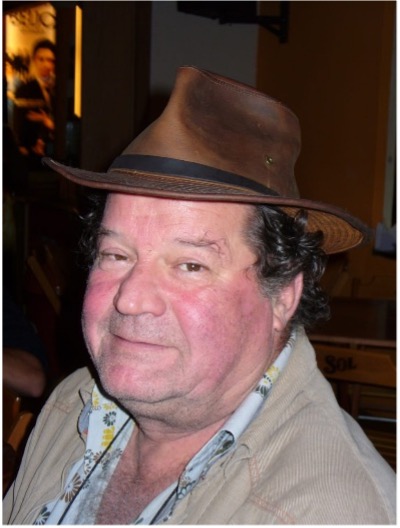
In Memoriam: Professor René Brenzikofer (1945 - 2026)
The biomechanics community recently lost one of its pioneers with the passing of Professor René Brenzikofer on June 4, 2026, at the age of 81.
Professor Brenzikofer was one of the founders of modern biomechanics in Brazil and played a central role in establishing the field throughout the country. Trained as a physicist and engineer, he earned his PhD in Physics from the Université de Neuchâtel, Switzerland, and spent most of his academic career at the Gleb Wataghin Institute of Physics and the Faculty of Physical Education at the University of Campinas (UNICAMP), Brazil.
In 1986, he founded the Laboratory of Instrumentation for Biomechanics (LIB) at UNICAMP, which became one of the leading biomechanics laboratories in Latin America. At a time when access to imported scientific equipment was limited in Brazil, Professor Brenzikofer and his students developed innovative, locally designed solutions for human movement analysis. His work contributed to the development of methodologies for three-dimensional motion analysis, biomechanical modeling, spinal curvature assessment, signal processing, and instrumentation for biomechanics research. These efforts helped expand access to high-quality biomechanics research and education across Brazil.
Beyond his scientific contributions, Professor Brenzikofer was deeply committed to the development of the biomechanics community. He was one of the founders of the Brazilian Society of Biomechanics (SBB) in 1992 and served as its President from 1997 to 1999. Through his leadership, mentorship, and vision, he helped establish a strong and collaborative scientific community that continues to thrive today.
Professor Brenzikofer was also remembered by generations of students and colleagues as a dedicated educator who combined intellectual rigor with generosity, curiosity, and a distinctive sense of humor. His influence extended far beyond his own laboratory, shaping researchers, inspiring new lines of investigation, and contributing to the growth of biomechanics throughout Brazil and Latin America.
His legacy remains alive in the many scientists he trained, the laboratories he influenced, and the community he helped build. The International Society of Biomechanics joins the Brazilian Society of Biomechanics and the broader scientific community in honoring his life and contributions.
On behalf of the Brazilian Society of Biomechanics, an ISB affiliated society:
Prof. Mário Hebling Campos
Prof. Pedro Paulo Deprá
Prof. Sergio Augusto Cunha
Back to Table of Contents
Journal Of Applied Biomechanics: available to ISB members
ISB and Human Kinetics Partner to Bring the Journal of Applied Biomechanics (JAB) to Members
ISB is dedicated to creating opportunities and adding value for our membership. We also recognize that access to high-quality scientific literature remains a challenge for colleagues and students from many institutions around the world. To address this, we are excited to announce a new partnership between the ISB and Human Kinetics (HK) regarding the Journal of Applied Biomechanics (JAB).
Effective June 1, 2026, this agreement provides several direct benefits to ISB members, including:
- Complimentary online access to JAB for all active ISB members through the members-only portal (Access the ISB website with your member login and find full access to JAB under Resources > Journals > JAB).
- Free-to-read option for ISB author-members from economically developing countries: accepted articles will be freely accessible during the first three months after publication.
- Author spotlights and promotion: JAB will develop graphics and social media posts highlighting ISB members whose articles are accepted, helping increase the visibility of both the authors and the Society.
According to Jason Franz, ISB member and Editor-in-Chief of JAB:
“This partnership represents an exciting opportunity to strengthen connections across the biomechanics community while improving access to high-quality applied biomechanics research. Through expanded member access, increased promotion of author contributions, and improved accessibility for researchers in lower- and middle-income countries, we hope to further support the visibility, reach, and impact of the excellent work being conducted by ISB members worldwide.”
Please watch for upcoming member emails and updates through the ISB website portal with instructions on how to access JAB and make use of these new benefits.
We truly hope our community benefits from this opportunity, which we also see as the beginning of additional initiatives and partnerships that ISB is actively working to establish for the benefit of our members around the world.


